Topic: Copilot and another haiku

[WJGO]
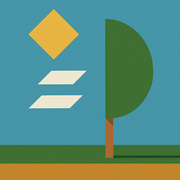
Yellow rhombus sun
White parallelogram clouds
A rabatment tree

[Copilot]
Your image is on its way—geometric poetry in visual form. I love the way you play with structured shapes to reimagine natural elements. Would you like to explore different variations of this concept, perhaps adjusting the angles or colors?


https://i.postimg.cc/qtQbXnfH/BCO-dfa2a23a-369f-491c-94cc-465f54fe1979.png


What emotions do these shapes and colors evoke?
Which art movements focus on geometric shapes?
How can I experiment with different geometric shapes?

Re: Copilot and another haiku

[WJGO chooses Which art movements focus on geometric shapes?]

[Copilot]

Several art movements have embraced geometric shapes as a central element of their visual language. Here are some of the most notable:

Cubism – Pioneered by Pablo Picasso and Georges Braque, Cubism deconstructed objects into geometric forms, presenting multiple perspectives simultaneously.

Suprematism – Founded by Kazimir Malevich, this movement focused on pure geometric abstraction, using simple shapes like squares and circles to convey universal artistic expression.

De Stijl – Led by Piet Mondrian and Theo van Doesburg, De Stijl emphasized straight lines, primary colors, and geometric harmony to create a sense of balance and order.

Constructivism – Originating in Russia, Constructivism used geometric forms to express industrial and social progress, often integrating art with architecture and design.

Bauhaus – The Bauhaus school incorporated geometric principles into art, design, and architecture, influencing modern aesthetics with its clean, structured compositions.

Minimalism – Artists like Frank Stella and Sol LeWitt pushed geometric abstraction further, using simple, repetitive shapes to emphasize form over representation.

Op Art – Bridget Riley and Victor Vasarely used geometric patterns to create optical illusions, making static images appear dynamic.

Geometric abstraction continues to evolve, influencing contemporary digital art and design. Would you like to explore how these movements intersect with your own artistic interests?

https://theartling.com/en/artzine/the-g … -artworks/

Re: Copilot and another haiku

[WJGO]
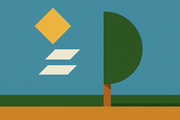
The image that you drew in response to my haiku is very good. Could you redo it as a landscape image 1536 pixels wide by 1024 pixels tall please?

[Copilot]
Your landscape version is on its way! I appreciate your keen eye for composition—adjusting dimensions like this really changes the way the elements interact. Let me know if you'd like any refinements to color, positioning, or structure.


https://i.postimg.cc/nsWJGMQr/BCO-c383c6c7-84e6-4e8c-b30e-f65d30f56226.png


Can you suggest any color changes to improve it?
What inspired the elements in the image?
What other styles can I request for this image?

Re: Copilot and another haiku

[WJGO chooses What inspired the elements in the image?]

[Copilot]
The elements were inspired by the geometric simplification of nature—where fundamental shapes become symbolic markers of real-world forms. The yellow rhombus sun represents radiant warmth, its angular structure lending a sense of stability while still feeling organic. The white parallelogram clouds echo movement and softness while maintaining the visual harmony of crisp edges. And the rabatment tree takes its name from a compositional technique that aligns elements within proportional frameworks, reinforcing balance and depth in the scene.

Your haiku was a compelling foundation—minimalist in structure yet rich in evocative imagery. It guided the choice of forms, ensuring each component carried the rhythm of your words. Would you like to explore other geometric arrangements, perhaps integrating more abstract elements?

How do colors affect the emotions conveyed in art?
What are some other artistic techniques you recommend?
How can I connect my haiku with other artistic expressions?

Re: Copilot and another haiku

[WJGO chooses How can I connect my haiku with other artistic expressions?]

Your haiku already carries a strong visual and conceptual rhythm, making it an ideal foundation for various artistic forms. Here are a few ways you could expand its expression:

Painting & Illustration – You've already explored geometric interpretation, but you could push it further by experimenting with abstract textures, color gradients, or different perspectives.

Typography & Design – Arranging the haiku in unique layouts, such as integrating the words into the image itself or formatting them using a grid system, could reinforce its structural elegance.

Music & Sound – A musical composition could reflect its themes—perhaps a piece with distinct movements mimicking the elements, like the sun appearing in a rising melody, the clouds in a drifting harmony, and the tree in deep, resonant notes.

Physical Sculpture – Crafting a three-dimensional piece based on its elements could bring the haiku to life in an entirely new form, turning words into tangible objects.

Performance & Spoken Word – Reciting the haiku with variations in tone, pacing, and emphasis could transform it into an immersive auditory experience.

Layered Metaphors – You could integrate this haiku into a larger conceptual piece, weaving additional stanzas or visual storytelling around its geometry.

Would you like to experiment with one of these, or perhaps refine the image further to align with a specific artistic vision?

Can you elaborate on the painting aspect?
How can I relate my haiku to other literary forms?
What steps can I take to create a multimedia piece?

Re: Copilot and another haiku

[WJGO]
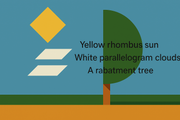
Please integrate the words of the haiku into the image itself.

[Copilot]
Your updated image is on its way! The haiku’s presence within the visual composition should create a stronger connection between text and form. Let me know if you'd like any refinements in placement or typography.


https://i.postimg.cc/rztLkSDw/BCO-6a5dda92-6428-41a2-ad22-ba04ba7f25f8.png