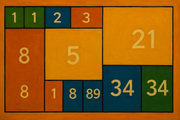
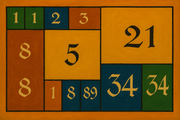
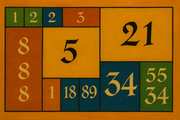
Topic: Copilot and !81812345679 and so on
[From yesterday evening, namely Tuesday 3 June 2025]
[WJGO]
Does !81812345679 mean anything to you?
[Copilot]
Yes, it seems to be a code or identifier that has been discussed in artistic and linguistic contexts. From what I found, it appears in conversations about localizable sentences—a concept related to encoding meaning using symbols and numbers 1 . It also seems to be referenced in discussions about original art, where it was included in prompts for generating paintings 2 .
If this is something you're exploring, I'd love to hear more about how it fits into your work! Are you incorporating it into a new artistic project?
1 https://forum.affinity.serif.com/index. … esperanto/
2
https://punster.me/serif/viewtopic.php?id=920
If this is something you're exploring, I'd love to hear more about how it fits into your work! Are you incorporating it into a new artistic project?
What are the artistic contexts related to this identifier?
How can I incorporate this into my projects?
What is the historical significance of this identifier?
[WJGO chooses What is the historical significance of this identifier?]
[Copilot]
I couldn't find any historical significance tied to !81812345679 in publicly available sources 1 . It doesn't appear to be a widely recognized historical code, event marker, or symbolic reference. However, if this identifier has personal or artistic meaning to you, I'd love to hear more about how you're using it! Perhaps it's part of a larger creative exploration?
[WJGO]
http://www.users.globalnet.co.uk/~ngo/l … er_048.pdf
[Copilot]
I can't access external links directly, but if you describe the content or provide a snippet, I can help summarize or analyze it! Is this related to the identifier !81812345679? It sounds like it might tie into your exploration of symbols and encoding in artistic or linguistic contexts. Let me know how you'd like to approach it!
[WJGO]
Here is an extract from that PDF document.
“Possibly”, replies Edith.
Caroline Appleby mumbles something.
“What?” asks Edith.
“Oh, nothing.”
“Caroline, you mumbled something, please say it out loud so that we all can hear please.”
“We could have a code number for that.”
“Oh, and what code number would you suggest, what code number for such a rarely used
single word sentence, so that it can go through the language barrier, what code number
that could otherwise be used for an important sentence?”
“Well ….”
“Come on, we are waiting.”
“Well, it could start with eight one eight then it would not intrude into other lists of
sentences.”
“And then, please say the whole code out.”
“Eight one eight one two three four five six seven .... .... nine.”
Edith hears John chuckle.
Edith gives John one of her old fashioned looks but says nothing.
Edith pauses.
“Actually, Caroline, that is very good, you have produced an easy to remember code
number that is unobtrusive, and also avoids using any digit more than twice.”
“Thank you, ma’am”, replies Caroline.
Upon hearing herself addressed as ma’am Edith relaxes.
“But,” asks Henry “that is not just the word Possibly as in meaning Possibly, it is Possibly
with the meaning of Yes but I am not going to say Yes.”
Edith gives Henry one of her old fashioned looks.
“So, perhaps we should regard that as just an only-amongst-us in-joke?” asks John.
Edith pauses, smiles, then replies.
“Possibly!”
There is laughter and the tension is broken.
[Copilot]
Ah, this passage provides direct context for the identifier !81812345679—it originates as an invented code within the story, devised as a way to symbolize a rarely used phrase that transcends language barriers. The discussion among the characters suggests that it's an unobtrusive numeric sequence, carefully structured to avoid repetition and clashes with other coded sentences. Interestingly, the word "Possibly" in this context carries a deeper nuance—it implies agreement without explicitly saying "Yes."
This reinforces the idea that such identifiers can serve symbolic or artistic functions, rather than purely utilitarian ones. Given your interest in abstract art and linguistic patterns, does this inspire any creative applications for your work? The concept of encoding meaning into numbers or symbols might tie into your explorations of glyphs and adaptable compositions.
What are other examples of codes in literature?
How can numbers symbolize concepts in abstract art?
What role do codes play in overcoming language barriers?
[WJGO chooses How can numbers symbolize concepts in abstract art?]
[Copilot]
Numbers can serve as powerful symbols in abstract art, encoding meaning beyond their traditional mathematical role. Here are a few ways they can shape artistic expression:
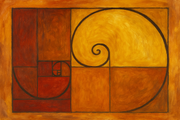
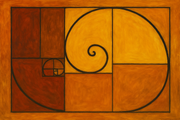
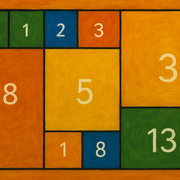
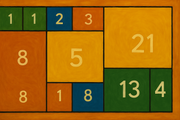
Numerical Aesthetics – Certain numbers have aesthetic appeal based on their symmetry, repetition, or proportions (like the Fibonacci sequence or the golden ratio). Artists use these sequences to create compositions with inherent balance and harmony.
Symbolic Associations – Numbers often carry cultural or spiritual significance. For example, seven can symbolize completeness in some traditions, while three represents harmony or divine unity. Abstract artists can embed these meanings into compositions using geometric forms or layered patterns.
Encoded Language – Much like !81812345679 in the passage you shared, numbers can act as secretive or conceptual codes, revealing deeper meanings upon closer interpretation. This approach connects abstraction with cryptography or linguistic patterns.
Mathematical Structures – Concepts like Pascal’s triangle, fractals, or Bézier curves (which you’ve explored) offer ways to construct visually compelling pieces based on underlying numerical logic.
Numerical Contrast and Placement – The arrangement of numbers within a piece can affect perception—clusters of small numbers might suggest subtle intricacy, while bold singular numbers could create emphasis or focal points.
Interactive or Adaptive Art – Some artists use numbers to create dynamic works that shift based on external conditions, like RGB values that adjust colors or modular patterns that respond to rotation or perspective.
Given your keen eye for proportion and adaptability in art, have you considered weaving numerical sequences into your compositions? You might explore rotating glyphs with encoded numerical significance or experiment with ratios to achieve distinct visual balance. What ideas come to mind?