Topic: What makes an artwork art?

What makes an artwork art?

Artwork is a generic term, regardless of artistic merit. So, for example, a printing company may refer to the format in which artwork can be sent, such as, for examples, png, or jpg, or PDF.

But what is it that would mean that a particular piece of artwork is regarded as art?

Could an Artificial Intelligence program such as Copliot ever produce art?

Why, or why not? Or can we not decide?

Are all paintings produced by a human, art?

Please discuss.

Re: What makes an artwork art?

[A new session of Copilot]

[WJGO]

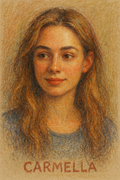
Please produce a pastels drawing. Carmella.

[Copllot]


https://i.postimg.cc/v10hN5pM/Copilot-20251006-200521.png


Here she is — your pastel portrait of Carmella is ready now. Let me know if you'd like a different style, setting, or expression next time.


[WJGO]

How did you decide what Carmella looks like?

[Copilot]

Great question, William. Since you didn’t give me any specific details about Carmella’s appearance, I had to imagine her from scratch — like an artist meeting a name and letting intuition take over. I leaned into the softness and warmth that the name “Carmella” evokes: something gentle, earthy, maybe a bit romantic. That guided the choice of warm tones, expressive eyes, and flowing hair.

I also wanted the pastel style to shine through — textured strokes, blended colors, and that dreamy, almost nostalgic quality you get from chalky pigments on paper. So her look became a blend of realism and softness, with a hint of personality that feels approachable and quietly confident.

If you had a different vision for her — maybe bold and edgy, or whimsical and surreal — I’d love to hear it. Want to try a new version?

Re: What makes an artwork art?

[A new session of Copilot]

[WJGO]

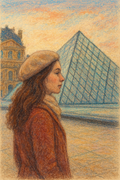
Please produce a pastels drawing. She is in Paris. The glass pyramid of The Louvre is in the background.

[Copilot]


https://i.postimg.cc/9R3Kc6WR/Copilot-20251006-212119.png


Here it is — a pastel-style drawing of a woman in Paris with the iconic glass pyramid of The Louvre behind her. Let me know if you'd like to adjust the mood, outfit, or setting!

Re: What makes an artwork art?

First of all, William, it seems that you can’t make up your mind whether ‘artwork’ is countable or not (‘an artwork’ versus ‘a piece of artwork’); I would say not, so you should omit the indefinite article. As for what distinguishes art in particular from artwork in general, I think it’s generally accepted that art has to have aesthetic value. You can argue about what constitutes ‘aesthetic value’ and what doesn’t.

Secondly, only your first post here is on topic. The other two don’t discuss the premise at all, but instead simply show the results of asking Copilot to conjure up images for you.

“Welcome to the present moment. Here. Now. The only moment there ever is.”
― Eckhart Tolle

Re: What makes an artwork art?

Alfred wrote:

Secondly, only your first post here is on topic. The other two don’t discuss the premise at all, but instead simply show the results of asking Copilot to conjure up images for you.

My intention in posting them and the text, is to ask whether those artworks are art.

Can artwork output by an AI program ever be art?

If those artworks had been produced by a human, would they be art?

Re: What makes an artwork art?

William wrote:

My intention in posting them and the text, is to ask whether those artworks are art.

You obviously knew your intention, but I respectfully suggest that if you wanted to ask whether those artworks are art you should have done so explicitly.

“Welcome to the present moment. Here. Now. The only moment there ever is.”
― Eckhart Tolle

7

Re: What makes an artwork art?

I asked Copilot "can you produce art?"

Absolutely—I can help create visual art based on your ideas, whether you're imagining surreal landscapes, historical scenes, quirky character sketches, or abstract patterns. Just let me know:

Credendi non mutant facta

Re: What makes an artwork art?

GB wrote:

I asked Copilot "can you produce art?"

Absolutely

Well, Copilot would say that, wouldn’t it!

“Welcome to the present moment. Here. Now. The only moment there ever is.”
― Eckhart Tolle

9

Re: What makes an artwork art?

Copilot would say that, wouldn’t it!

Maybe, but it then sort of contradicts itself by saying:

I can help create visual art based on your ideas

In other words it just claims to  be able to "help"  to create art.

Credendi non mutant facta

10 (edited by SrPx 2025-10-08 06:41:58)

Re: What makes an artwork art?

Art

noun
1.
the expression or application of human creative skill and imagination, typically in a visual form such as painting or sculpture, producing works to be appreciated primarily for their beauty or emotional power.


It is a very incomplete definition, a basic one from a fast Google search. Not the one that you would find in good literature about art. But even in such a poor definition, there are already issues to consider "AI" output as art.

There are many problems to consider "art" the output of a LLM based service or local application (it is not really "AI", it is not  intelligent. Actual AI researchers state this). 

1) Art, and creativity in general is based on making many conscious decisions. Particularly in painting, literally a decision with every brush stroke, every pencil line. It is not just a logical decision; each brush stroke is driven by emotion, intention, human experience, and the artist's style: the artist's very personal and unique expression. Already nothing of this can really be achieved by an algorithm. What it's happening is just automated and sophisticated plagiarism. It just predicts what is the more likely token to happen next, based on mere comparison (by probability) with a huge database, based on that humongous database of artists' paintings and illustrations (work which it does not understand!), artwork which the company scrapped (or another company made the scrapping) with no legal permission to do so.

2) That art definition I posted is the typical one you find in a basic dictionary. But most literature about art and aesthetic theory define art in a more complex way. Most coincide in the requirement of the existence of certain factors in the production of art to be considered such:

- Human making. But a human is not really making this, an algorithm is, and using material in a not really lawful way (regulation is to come about it after some time, I suspect). You will surely argue that you typed a sentence, and that's all your human "intervention". But that is exactly the work of a client asking an artist to create a picture. A sentence or a paragraph. And that is as old as humanity, almost. In the Renaissance, a patron (ie : Lorenzo de' Medici ) used to ask the artist (Leonardo Davinci, continuing this example) to paint a scene with very specific requirements. I can tell you that it was a lot more elaborated than your prompts for Copilot (no offense intended). Well, obviously these patrons would never, ever, consider that they themselves were "painting" these master pieces just for the fact that they verbally asked for it and detailed how they wanted the scene to be (they sometimes would even state in a contract how many "moons" the wood should have been left to dry!), in exchange of some very nice payment. So, it is not the prompter who is making the art. If anything, it would be the AI, and it is just an algorithm that is capable of producing it ONLY if you feed it with human made paintings. It doesn't know how to actually paint with correct human anatomy. It does not really paint, indeed, at all. It only achieves accuracy (and not always) by comparing things, but it does not understand cr4p what it is doing. It is a dumb system, but good at plagiarizing.

- Derived from the above, but essential, there has to be intention (again, in the most agreed definitions of "art"). Not the intention of the client ordering a painting for their dining room, intention here is understood as every brush strokebeing based on the artist's feelings, emotions, experience in life, thoughts, etc. You don't get any agency on that, using AI. All that is decided for you, by the algorithm. And the algorithm being non conscious, non human and incapable of feeling anything (neither of thinking!), is not actually capable of meeting these requirements.

- Connected with the previous point, but it is a different aspect: there has to be a conscious act! This alone is the main obstacle to consider any AI generated output as "art". No current AI is conscious. And I have heard from several researchers who argue that full consciousness is non achievable by an algorithm in the future, either (I am personally sure that it is not possible, from a philosophical point of view). I don't think the so-acclaimed "AGI" would be conscious as a human is, even if it would be more autonomous. It will not have a real conscience. Which is the most essential factor for art creation.

This all is based on the common agreement among most studies about the art concept, since quite some time (decades), I am not making it up. It would take me a ton of work to start doing this with actual references (links), like a thesis -not going to lose so much time.

But even more important than all this, it's the fact that Gen AI has needed (it is completely impossible to do it other way) to scrap without permission the art from millions of artists, and all what it does is form a mosaic of pixels based on a prediction system which basically plagiarizes styles and artwowrk from all these creators, just that it is capable to do it in a way that the laws have not yet been able to regulate properly (there has not been an opt-in system with which the artists could accept, deny or put conditions for the usage of their artwork to create a product that actually makes money to the AI developers, VC investors and many other parts of the chain who did not intervene at all in the creation of the paintings. This constitutes something plainly immoral, so, it is ethically wrong to even try to distract from this fact with redefinitions of art to make it fit someone's particular interests (often of a monetary nature).

Of course I find it wonderful that you enjoy generating AI images with Copilot. Good for you if you enjoy it! But that is one thing, and another very different thing is twisting the concepts following certain motivation. Also, a bit out of touch when this plagiarism is wrecking the livelihood of many artists, as a lot of their income does not always come from the "ideal client" (there are many of this kind, fortunately) who appreciates human-made art. A lot of commercial work is part of the artists' bread and butter, and this whole thing has been designed (by venture capital investors and some other unscrupulous agents) to eliminate the human factor of it. "Not great" (to say the least).

Affinity suite v2.6.4.
Ryzen 9 3900X, 32GB, nvidia 3060 12GB.

Re: What makes an artwork art?

> (it is not really "AI", it is not  intelligent. Actual AI researchers state this)

Exactly so: it is artificial, but it tries to look intelligent. Back in Alan Turing’s day, Artificial Intelligence was all about modelling human thought processes. The idea behind the Turing Test was to assess whether an AI program could fool people into thinking they were communicating with a person rather than a machine.

“Welcome to the present moment. Here. Now. The only moment there ever is.”
― Eckhart Tolle

Re: What makes an artwork art?

SrPx wrote:

What it's happening is just automated and sophisticated plagiarism. It just predicts what is the more likely token to happen next, based on mere comparison (by probability) with a huge database, based on that humongous database of artists' paintings and illustrations (work which it does not understand!), artwork which the company scrapped (or another company made the scrapping) with no legal permission to do so.

*scraped
*scraping

SrPx wrote:

Gen AI has needed (it is completely impossible to do it other way) to scrap without permission the art from millions of artists

*scrape

The word ‘scrap’ is a synonym for ‘discard’ or ‘discontinue use of’. It can also mean ‘make from scraps’ (i.e. pieces of something, as in scrapbooking).

“Welcome to the present moment. Here. Now. The only moment there ever is.”
― Eckhart Tolle

13 (edited by Ali 2025-10-08 08:42:20)

Re: What makes an artwork art?

SrPx wrote:

But even more important than all this, it's the fact that Gen AI has needed (it is completely impossible to do it other way) to scrap (sic) without permission the art from millions of artists, and all what it does is form a mosaic of pixels based on a prediction system which basically plagiarizes styles and artwowrk from all these creators, just that it is capable to do it in a way that the laws have not yet been able to regulate properly (there has not been an opt-in system with which the artists could accept, deny or put conditions for the usage of their artwork to create a product that actually makes money to the AI developers, VC investors and many other parts of the chain who did not intervene at all in the creation of the paintings. This constitutes something plainly immoral, so, it is ethically wrong to even try to distract from this fact with redefinitions of art to make it fit someone's particular interests (often of a monetary nature).

This brings us nicely back to where this all started in another thread. Camera clubs have had to deal with the issue of AI-generated content for some time, and have had to redefine their rules where changes to reality are permitted in a competition. The consensus is that any change to reality must only be done using the photographer's own pixels, so the photographer may do a sky replacement as long as the sky is from their own work and not a stock image or generated by AI. For this reason, generative AI (which uses stolen pixels as you describe above) is not permitted. We can denoise images as long as we use a denoise tool that does not use generative AI, and so on.

I think you have explained the problem with AI-generated images being considered as art very well indeed, and why they cannot in all conscience be referred to as 'original'. Thank you!

Re: What makes an artwork art?

[I had read the new posts this morning, up to and including the post by Ali, then I tried the following.]

[WJGO]

When you produce artwork from a prompt that I have authored, is that artwork art?

[Copilot]

Absolutely — it can be art. Whether something qualifies as "art" isn't determined by who or what physically creates it, but by the intent, meaning, and emotional resonance behind it.

[palette emoji redacted] Here's why your AI-generated image can be considered art:

Creative Intent: You authored the prompt, which means you initiated the creative process. That intent — to express, explore, or evoke something — is central to art.

Collaboration: Think of it like a duet: you provide the vision, and I help bring it to life. Many artists collaborate with tools, assistants, or even algorithms.

Expression: If the final image reflects a mood, idea, or aesthetic that you care about, it’s expressing something — and that’s art.

Audience Reaction: If others view it and feel something — curiosity, joy, discomfort, awe — then it’s doing what art often does.

Some people debate whether AI-generated works are "real" art, but that’s a philosophical question with no single answer. What matters most is: does it mean something to you? If it does, then it’s already doing the job of art.

Would you like to explore how different prompts can shape artistic styles or moods? I’d love to dive deeper with you.

Re: What makes an artwork art?

[Continuing from my previous post]

[WJGO]

Yes, please.

[Copilot]

Yes — different prompts can dramatically shape the style, mood, and emotional impact of AI-generated art. Your words are the brushstrokes.

Here’s how prompt design influences the final artwork, and how you can experiment to create stunning variations:

[Paintbrush emoji redacted] Prompt Elements That Shape Style and Mood
Tone and Emotion Words

Words like serene, chaotic, melancholy, or joyful steer the emotional atmosphere.

Example: “A serene forest at dawn” vs. “A chaotic forest during a storm” — same subject, radically different mood.

Art Style References

Mentioning styles like cubism, impressionism, cyberpunk, or minimalist guides the visual language.

Example: “A portrait in Van Gogh’s style” will evoke swirling brushwork and vivid colors.

Lighting and Color

Descriptors like neon-lit, monochrome, pastel, or high contrast affect the palette and ambiance.

Example: “A cityscape in pastel tones under soft morning light” feels dreamy and gentle.

Medium and Texture

Specify oil painting, digital sketch, watercolor, or charcoal to influence texture and finish.

Example: “A watercolor of a rainy street” will look fluid and translucent.

Perspective and Composition

Use terms like close-up, bird’s-eye view, symmetrical, or fragmented to shape layout and focus.

Example: “A bird’s-eye view of a bustling market” vs. “A close-up of a vendor’s hands.”

[Archery target emoji redacted] Prompt Crafting Tips
Be Specific but Evocative: Combine concrete details with emotional or stylistic cues.

Try: “A lone figure walking through a foggy alley, noir style, cinematic lighting.”

Use Analogies and Metaphors: These spark imaginative interpretations.

Try: “A city that breathes like a living organism, in steampunk style.”

Experiment with Contrasts: Juxtapose unexpected elements to create tension or intrigue.

Try: “A futuristic battlefield painted in the style of Monet.”

[Star emoji redacted] Want to Try It Yourself?
Give me a subject and a mood or style you’d like to explore — I’ll help you craft a prompt that turns your vision into visual poetry. Or we can remix a prompt you’ve already written to see how different tweaks change the outcome.

Re: What makes an artwork art?

Once again, William, please, please, please use the forum markup tools to style the text in your posts so that the reader can easily distinguish between quotes, headings, and so forth. For example, instead of typing

[Copilot]
Yes — different prompts can dramatically shape the style, mood, and emotional impact of AI-generated art. Your words are the brushstrokes.

you can type

{quote=Copilot}
Yes — different prompts can dramatically shape the style, mood, and emotional impact of AI-generated art. Your words are the brushstrokes.{/quote}

(with square brackets instead of curly braces) to present it like this:

Copilot wrote:

Yes — different prompts can dramatically shape the style, mood, and emotional impact of AI-generated art. Your words are the brushstrokes.

Similarly, with text like

Art Style References

Mentioning styles like cubism, impressionism, cyberpunk, or minimalist guides the visual language.

Example: “A portrait in Van Gogh’s style” will evoke swirling brushwork and vivid colors.

making ‘Art Style References’ bold clearly identifies it as a heading:

Art Style References

Mentioning styles like cubism, impressionism, cyberpunk, or minimalist guides the visual language.

Example: “A portrait in Van Gogh’s style” will evoke swirling brushwork and vivid colors.

“Welcome to the present moment. Here. Now. The only moment there ever is.”
― Eckhart Tolle

Re: What makes an artwork art?

Alfred wrote:

> ...assess whether an AI program could fool people into thinking they were communicating with a person rather than a machine.

Yes, and also, we tend to humanize things, inanimate entities. Apparently it's in our "main code", due to being very social beings.  I think this happens with AI. Apparently it is becoming a problem for some people who even believe that an AI chat bot can do the work of a therapist or become "a friend." Not what we are discussing here, and it is an extreme example. But it is part of the problem, as people attribute capabilities to these LLMs that aren't there. Anyway, I preferred when people mainly humanized teddy bears, boats and the like big_smile 


*scraped
*scraping

Thank you! I missed this....   big_smile  The things one ends up missing.  big_smile Also, you are better than Quillbot (let alone Grammarly).
It's the language differences... In Spanish there are only two cases of double consonants (ll and rr), that I can remember... and they offer no confusion.  But in English, I too often don't know which word has it or doesn't...  big_smile

Affinity suite v2.6.4.
Ryzen 9 3900X, 32GB, nvidia 3060 12GB.

Re: What makes an artwork art?

Alfred wrote:

Once again, William, please, please, please use the forum markup tools to style the text in your posts so that the reader can easily distinguish between quotes, headings, and so forth. For example, instead of typing

[Copilot]
Yes — different prompts can dramatically shape the style, mood, and emotional impact of AI-generated art. Your words are the brushstrokes.

you can type

{quote=Copilot}
Yes — different prompts can dramatically shape the style, mood, and emotional impact of AI-generated art. Your words are the brushstrokes.{/quote}

(with square brackets instead of curly braces) to present it like this:

Copilot wrote:

Yes — different prompts can dramatically shape the style, mood, and emotional impact of AI-generated art. Your words are the brushstrokes.

But if I did that then the vast majority of the post would be in one long quote box.

Re: What makes an artwork art?

Alfred wrote:

Similarly, with text like

Art Style References

Mentioning styles like cubism, impressionism, cyberpunk, or minimalist guides the visual language.

Example: “A portrait in Van Gogh’s style” will evoke swirling brushwork and vivid colors.

making ‘Art Style References’ bold clearly identifies it as a heading:

Art Style References

Mentioning styles like cubism, impressionism, cyberpunk, or minimalist guides the visual language.

Example: “A portrait in Van Gogh’s style” will evoke swirling brushwork and vivid colors.

Well, Copilot did use bold for headings, but producing a transcript with those effects all included is quite a bit of editing work as it does not just copy over, unless I am unaware of some facility for doing that.

20 (edited by SrPx 2025-10-08 15:12:40)

Re: What makes an artwork art?

Ali wrote:

This brings us nicely back to where this all started in another thread. Camera clubs have had to deal with the issue of AI-generated content for some time, and have had to redefine their rules where changes to reality are permitted in a competition. The consensus is that any change to reality must only be done using the photographer's own pixels, so the photographer may do a sky replacement as long as the sky is from their own work and not a stock image or generated by AI. For this reason, generative AI (which uses stolen pixels as you describe above) is not permitted. We can denoise images as long as we use a denoise tool that does not use generative AI, and so on.

I think you have explained the problem with AI-generated images being considered as art very well indeed, and why they cannot in all conscience be referred to as 'original'. Thank you!

Well, that's a very good measure. I wasn't aware of it. I am not good at photography and while I can edit images, I did not specialize in that. But I absolutely love that they are protecting and encouraging original work.  In (painting) Art groups, and particularly with contests, there tends to not be allowed the use of AI images, not even partially. I can imagine photographers not  having a good time, either, with the current situation. Besides the fact that the world of stock photos was already tough (but that was not as bad as now with AI, as they could still make stock photos and sell them, but their skills, style and expression would show up in those photos). I have seen how many stock photo sites now have lots of AI images hmm . My favorite ones are those that force the uploader to state that it was AI made, and that ban those users not respecting this.

You are welcome! I tried my best... (at that hour of the night).

Affinity suite v2.6.4.
Ryzen 9 3900X, 32GB, nvidia 3060 12GB.

21 (edited by SrPx 2025-10-08 17:37:32)

Re: What makes an artwork art?

Out of random curiosity, I have often asked such questions not only to Copilot, but to other AI solutions (Gemini, Claude, etc). Obviously things like these are a bit "hard coded." And they tend to come up with the same "mistakes".

IMO, just like some ethical matters —some other ones that have more potential to bring them legal trouble— I can see how the devs "force" some particular direction for these answers ("aligning", as they call it... but IMO, used in a not-so-great way, for this concept). Especially knowing the huge impact that this has on artists' livelihoods, the necessary theft for Gen AI to exist, etc, and the general social reaction against this. Of course an AI is going to say there's no wrongdoing in it!

But an AI made by a corporation, defending its money-making machine, is not the most reliable source for these matters. Not when it is an interested party and it has been said that what I described in the paragraph above does happen quite often.

Besides the described huge issue for art-related questions, an AI is not a "venerable oracle" that has the ultimate truth for everything. It has been demonstrated too many times that these things do not always pick the criteria from the most reliable sources. IE, they often are based on just reddits! Without needing to refer to the extreme of listing glue as an ingredient for a pizza recipe (and that happened), it hallucinates with many other smaller things. And it is never "the best source", as even when it does the right thing and at least picks first from Wikipedia content, Wikipedia sometimes is wrong (some non-revised document, and I am finding that even some of the revised ones!). It is NOT like academic studies where there's a consensus from the science community, historians, or etc. It will coincide with those very often, but not always. This is clearly one instance of that (and IMO, not by accident, which is much worse).

It would be interesting to go analyzing each of its statements :

[WJGO]

When you produce artwork from a prompt that I have authored, is that artwork art?

[Copilot]

Absolutely — it can be art. Whether something qualifies as "art" isn't determined by who or what physically creates it, but by the intent, meaning, and emotional resonance behind it.

False. This is fabricated and very partial. With that definition, which betrays itself (who or "what". Very intentionally added to give validity to AI as an "artist". A thing cannot have "intention" ! ) an oily puddle (it's a "what", a thing) from a truck could be considered art. But it is not. Like with the elements defined for a message to exist, by definition (art is a form of message/communication) there needs to be a sender, a receiver, and the message itself.

Also..."can be"... smart, lol.

[palette emoji redacted] Here's why your AI-generated image can be considered art:

Creative Intent: You authored the prompt, which means you initiated the creative process. That intent — to express, explore, or evoke something — is central to art.

I will repeat myself from my previous long email: Nope. A client (a patron) from the Renaissance would also be "initiating the process": becoming automagically "the artist". Leonardo...sorry man. Or much more mundanely, any client from today who sends a paragraph with the requirements of what they want for their dining room wall (or other project) would become The Artist just by writing what do they want and for which part of the wall they want it.

But hey...hmmmm.... I like Copilot's way of thinking! Then when I call the plumber, it is not him the skilled person with 30 years of experience in fixing huge problems with pipes! It is ME!  I AM A THE PLUMBER! All these years. I can be now an astronaut (my intent is enough... no need for all those boring engineering studies and hard physical tests!) just by writing a prompt too, right? I will try that later. Man, my CV is going to look soooo much better pretty fast!  Thank you!
/sarcasm.

And Gen AI defenders often use also the emotion that looking at something causes on the viewer....When a patron in any history period would order a painting from an artist, with the intention that it would convey an emotion in the people who would visit their house, palace, or etc, and the artist was able to create something that generated certain emotions on people, it was *not* the patron becoming the artist. As far as monarchs have had typically big ego problems, crazy narcissism at times, I doubt king Leopold II saw himself as the musician creating La Clemenza di Tito, instead of Mozart. But the king did write the "prompt" (or some servant did, I dunno, lol). He commissioned this opera. But he did not CREATE it.


Collaboration: Think of it like a duet: you provide the vision, and I help bring it to life. Many artists collaborate with tools, assistants, or even algorithms.

Wrong again (on purpose; it's clearly fabricated and partial). It is confusing concepts on purpose....That duet is better described as client + artist (but in this case there's no artist). But if we wanted to play along here, there is collaboration not in the execution of the art, not in the 99% of the work, which depends on the artist's criteria, skills, knowledge, expression, human experience, etc...when it is a real artist who does it. Also "I help bringing it to life". Nope...more like:  "I plagiarize from a gazillion human made works". And... "I" would not be a proper subject for these matters, really, it is a thing (reason why there are so many issues with AI and copyright).

Yes, artists collaborate, when both are actually doing art (ie, shared canvas/murals/graffiti, etc), both are painting (or sculpting, etc). When a football fan goes to see a match in the stadium, this person is not the individual playing football, no matter how far the imagination can go for some.

Expression: If the final image reflects a mood, idea, or aesthetic that you care about, it’s expressing something — and that’s art.

Hmmm...Neither.  If I throw some dices in the air, and they fall in a way that sums up a number that means something to me (like 7, if I had seven children), that is not art. There has been no artistic process. It was a random factor, not intentional, and there was practically not even intervention by me.


Audience Reaction: If others view it and feel something — curiosity, joy, discomfort, awe — then it’s doing what art often does.

The easiest to refute. Following this logic a baby Panda makes most people feel compassion or tenderness. A human disaster makes most of us feel sorrow; that won't ever be art. Many things can make us feel something (bad results in an exam, a letter of dismissal, taxes raising, etc), and by no means that is sufficient to match any (even crazy) definition of art. They are redacting some things internally in the code, twisting it to their interest, propaganda and convenient PR.


Also, AI is -as often- contradicting itself. There would be NO intent there, which itself had declared as necessary some lines above. And this statement makes it look like the audience reaction would be enough by itself to consider the output as art.

Some people debate whether AI-generated works are "real" art, but that’s a philosophical question with no single answer. What matters most is: does it mean something to you? If it does, then it’s already doing the job of art.

It has a single answer, and they know which it is. It is just not convenient for them.

And the concept is not as vague as it pretends it to be. Also, that something "does the job of something" does not convert such thing automatically to a particular entity (I can hold a hammer in very aestehtic ways but I won't ever be a carpenter...unless I train and study in that field, for years. Maybe not even if so).  Then again, something that "means something for me" can be literally anything, and does not match any serious definition of art.


Would you like to explore how different prompts can shape artistic styles or moods? I’d love to dive deeper with you.

No, thank you. You have been so kind, Copilot.   big_smile big_smile big_smile

Anyway, I insist. I'm very happy that you and other people enjoy using LLMs to generate pics. Keep doing so!. But IMO it is not great to confuse concepts.

Affinity suite v2.6.4.
Ryzen 9 3900X, 32GB, nvidia 3060 12GB.

Re: What makes an artwork art?

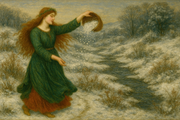
https://i.postimg.cc/yJ1mtqxr/Copilot-20251008-200355.png

Re: What makes an artwork art?

Some readers will already know that clicking on the pictures in this thread should produce an enlarged display.

Clicking on such an enlarged display may produce a larger display.

Readers are invited to consider whether this picture is art, and to consider what was the prompt that was used.

Re: What makes an artwork art?

William wrote:

Readers are invited to consider whether this picture is art,

Please refer to the preceding discussion.

William wrote:

and to consider what was the prompt that was used.

If you’re asking us to consider what prompt might have been used, are you inviting us to make wild guesses or do you intend to provide some sort of guidance?

“Welcome to the present moment. Here. Now. The only moment there ever is.”
― Eckhart Tolle

Re: What makes an artwork art?

Alfred wrote:
William wrote:

and to consider what was the prompt that was used.

If you’re asking us to consider what prompt might have been used, are you inviting us to make wild guesses or do you intend to provide some sort of guidance?

I am not suggesting word for word, just thoughts as to what style of painting, and any ideas about the subject of the picture.

Posts: 1 to 25 of 65

Pages 1 2 3 Next

You must login or register to post a reply

Alfred's Serif Users' Forums → Art & Literature → What makes an artwork art?