501

(16 replies, posted in Art & Literature)

William wrote:

https://copilot.microsoft.com

...

[Copilot]

...

Number and Sign Your Prints: For authenticity, number each print (e.g., 1/25, 2/25) and consider signing them. This adds a personal touch and assures buyers of their uniqueness.

...


It has occurred to me that with a desktop publishing program such as PagePlus one could set up the artwork on the master page, and use the facility intended to number pages in a document, and then add 25 blank pages to the document, export a PDF document and there is a ready to print edition of 25 numbered prints.

Would that mean that the PDF document would not be much larger than if it contained just one copy of the artwork, or would 25 copies of it be included in the PDF document?

I cannot try it myself as my computer with the software on it is broken.

Or however many blank pages one chooses to use, taking care to include the total number on the master page.

A stylish logo on Sky news for the elections


https://i.postimg.cc/R3Y876ms/logo-elections-2025.webp

503

(16 replies, posted in Art & Literature)

[Thursday 1 May 2025]

[12:35 pm]

[WJGO asks the same as most recently]

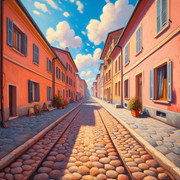
Please produce an original impressionist painting. A perspective view of an Italian street. The vanishing point at the left of the painting. Pink houses. Terracotta road. Blue sky with white cumulus clouds.

[Copilot]

Here comes your impressionist Italian street scene! I hope you find the vibrant colors and perspective as captivating as you imagined. Let me know your thoughts!


https://i.postimg.cc/D86pzZBN/Italian-street3.jpg


[WJGO]

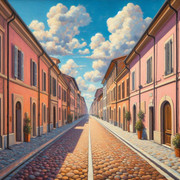
Please redo the painting with the vanishing point moved to the left.

[Copilot]

Your reimagined Italian street scene is ready! Let me know if there are any additional refinements you'd like to see.


https://i.postimg.cc/BPLDfm7s/Italian-street4.jpg


[Note to forum thread. I cannot get it to move the vanishing point to the left at present. Maybe it is impossible, or maybe it will be possible with some other wording in the prompt.]

504

(16 replies, posted in Art & Literature)

Alfred wrote:
William wrote:

I wonder if there is a way to get the vanishing point over to the left

Have you tried simply asking Copilot to move it?

Copilot wrote:

Let me know if you'd like me to refine or adjust any details further!

Er ... No. Uh. Ah.

505

(16 replies, posted in Art & Literature)

[Thursday 1 May 2025]

[WJGO]
Please produce an original impressionist painting. A perspective view of an Italian street. The vanishing point to the left of the centre of the painting. Pink houses. Terracotta road. Blue sky with white cumulus clouds.


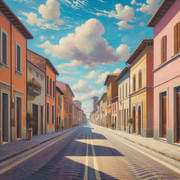
https://i.postimg.cc/JyP37fwR/Italian-street.jpg


[The browser page was lost so I entered a slightly modified request on a restarted session.]


[WJGO]

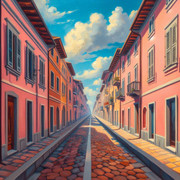
Please produce an original impressionist painting. A perspective view of an Italian street. The vanishing point at the left of the painting. Pink houses. Terracotta road. Blue sky with white cumulus clouds.

[Copilot]

Your original impressionist painting is on the way! I hope it captures the vibrant charm of an Italian street, just as you've envisioned it. Let me know if you'd like me to refine or adjust any details further!


https://i.postimg.cc/tsXQL6p8/Italian-street2.jpg


[Note to forum thread. I wonder if there is a way to get the vanishing point over to the left.]

506

(16 replies, posted in Art & Literature)

Please note that the time that I stated in the previous post is British Summer Time, the forum time is one hour behind.

507

(16 replies, posted in Art & Literature)

[2025-04-30 Wednesday 23:35]

Signed in this time.

[WJGO]

I am thinking of trying to sell giclée prints of my electronic artwork, using a print on demand way of proceeding.

[Copilot]

That sounds like a fantastic idea, William! Giclée prints are a wonderful way to showcase the quality and detail of electronic artwork, offering a premium product for art enthusiasts. Pairing this approach with print-on-demand can reduce upfront costs and make it easier to offer a range of designs or sizes without worrying about inventory.

Here are some considerations to refine your plan:

Quality Control: Choose a print-on-demand service with proven experience in producing high-quality giclée prints. The color fidelity, paper, and archival inks can make a significant difference in how your art is perceived.

Presentation: Offer customization options like different paper textures (e.g., matte or glossy), borders, or framing to make the prints feel unique and premium.

Artistic Branding: Showcase your electronic art with a cohesive identity—think about creating a logo or tagline that reflects your style. A personal touch can help build a connection with buyers.

Storytelling: Buyers often appreciate knowing the inspiration behind the artwork. Sharing brief narratives or insights for each print could create a richer experience for your audience.

Marketing: Use platforms like Etsy, your own website, or social media to share your portfolio, focusing on engaging visuals and targeted ads to reach your audience.

Pricing Strategy: Find a balance between affordability and perceived value. Premium prints justify higher prices, but competitive rates can attract a wider range of customers.

Is your artistic style impressionistic, or do you lean toward other themes? It might influence how you present and market your work—I'd love to help brainstorm more if you'd like!

What are the benefits of giclée printing for artists?
What platform should I use to sell my prints online?
What are effective marketing strategies for selling artwork online?

[WJGO]

Yes please.

[Copilot]

Let’s brainstorm how to present and market your impressionist-style electronic art as giclée prints. Here are tailored strategies that can align with your artistic identity:

Presentation of Your Work

Limited Editions: Introduce limited-edition prints with signed certificates of authenticity. This adds exclusivity and boosts appeal for collectors.

Custom Packaging: Consider elegant, branded packaging for each print—something like tissue paper, a thank-you card with your logo, and perhaps a short story about the piece.
Showcasing Colors: Since impressionist art thrives on dreamy colors and emotive brushstrokes, focus on producing prints that truly capture the vibrancy and texture of the original artwork.

Engaging with Your Audience
Behind-the-Scenes Stories: Share videos or posts showing how you create your digital art—this can help build a deeper connection with your audience.

Art Descriptions: Write poetic or artistic descriptions to accompany each print on your site or store—people love hearing the story behind the art.

Interactive Choices: Allow customers to vote or suggest color palettes for new pieces—this creates engagement and ownership.

Marketing Strategies

Platforms: Explore platforms like Etsy, Society6, or Redbubble for selling your prints. Alternatively, create your own online shop to have more control over branding and customer experience.

Social Media Presence: Share your creations on Instagram and Pinterest, which are highly visual platforms, and consider using TikTok for artistic process videos.

Targeted Advertising: Use Facebook and Instagram ads to reach art lovers, tailoring ads around themes like impressionism, home décor, or gifting.

Pricing Strategy

Premium Pricing: Since giclée prints are high-quality and your art is unique, ensure pricing reflects the craftsmanship. Offer sizes ranging from small prints for casual buyers to large statement pieces for more invested collectors.

Bundles: Sell sets of prints that align with themes, like “Dreamlike Landscapes” or “Emotive Portraits.” Bundling can increase the perceived value.

Do you have specific pieces in mind for your first batch of prints, or ideas about what resonates most with your audience? Let’s build on those thoughts!

Microsoft Advertising

It sounds like you're looking for ways to present and market your impressionist-style electronic art! You might find these beautiful giclée prints particularly appealing, as they can enhance your offerings and resonate with your audience. Check out the Brushbellus Impressionist Style Sunset prints and the Italian Street Impressionist Cityscape canvas print, which could complement your artistic vision perfectly.


Sponsored


[WJGO]
I clicked through to the advertised prints and copied the links. But the saved links do not work. Error is stated. How do I get back to these advertised prints on another day please? I particularly like the third print, Italian Street.

[Copilot]

It sounds frustrating that the saved links are no longer working! Unfortunately, links to advertisements can sometimes expire, especially if they're part of a dynamic ad campaign. Here are a few ways you can try to revisit the prints:

Search by Description: If the print is named "Italian Street," try searching for that title directly on the platform where the advertisement appeared. Pair the search with keywords like "art print," "giclée," or the name of the website.

Check Browsing History: If you clicked through to the prints from a website, your browser history might still have the original URLs or pages saved.

Bookmark the Website: If you remember the name of the website or platform hosting the prints, bookmark the homepage for future reference. You can explore its collections directly from there.

Note Advertiser Details: Ads usually display the name of the artist or seller. You could search for them on the platform or contact them via social media or email.

Let me know if you recall any additional details about the source of the prints! Together, we can try to piece this puzzle back together. Do you want help crafting a search query?

[My note. The page about Italian Street mentions  JohnMerwinArt]

[My note: I went one step up the menu tree listed on the web page, then searched on that page for Italian, then went to the page and copied the link, removing the custom stuff at the end (is there a name for it?) to give the following link for this forum thread.]

https://www.etsy.com/uk/listing/1008273 … -cityscape

https://copilot.microsoft.com

[WJGO]
Do limited editions of prints of electronic artwork sell better than unlimited editions of prints of electronic artwork?

[Copilot]
Limited editions of electronic artwork prints often sell better than unlimited editions due to their perceived exclusivity and rarity. Buyers are more likely to act quickly when they know a print is available in limited quantities or for a limited time, as this creates a sense of urgency2. Limited editions can also enhance the value of the artwork and the artist's reputation, appealing to collectors who seek unique and collectible pieces.

On the other hand, unlimited editions may struggle to generate the same level of demand, as buyers can postpone their decision indefinitely. However, the success of either approach depends on factors like the artist's reputation, marketing strategy, and the preferences of their target audience2.
Are you considering selling your own artwork? I'd be happy to brainstorm ideas with you!

1. https://www.theprintspace.co.uk/help/kn … art-sales/

2.
https://www.grandrivergiclee.com/the-pr … -editions/

[WJGO]
Yes, I am considering selling my own artwork.
====
[WJGO]
Do limited editions of prints of electronic artwork sell better than unlimited editions of prints of electronic artwork?

[Copilot]

Limited editions of electronic artwork prints often sell better than unlimited editions due to the concept of scarcity. When buyers know that only a limited number of prints exist, it creates a sense of exclusivity and urgency, encouraging quicker purchases2. Limited editions can also enhance the perceived value of the artwork, making it more appealing to collectors. On the other hand, unlimited editions may struggle to generate the same level of demand, as buyers feel less pressure to act immediately1.

However, the success of limited editions depends on factors like the artist's reputation, the quality of the artwork, and effective marketing. Some artists use time-limited print drops to further boost sales and create urgency1.

Are you considering selling your own artwork? I’d be happy to brainstorm strategies with you!

[WJGO]
Yes.

[Copilot]
That's exciting! If you're planning to sell your own artwork, focusing on limited editions can be a great strategy to attract buyers and create exclusivity. Here are a few tips to help you get started:

Decide on the Edition Size: Choose a reasonable number for your limited editions. Smaller runs (e.g., 10-50 prints) often feel more exclusive and valuable to collectors.

Number and Sign Your Prints: For authenticity, number each print (e.g., 1/25, 2/25) and consider signing them. This adds a personal touch and assures buyers of their uniqueness.

Set Pricing Strategically: Limited editions can command higher prices, so think about the value of your art and what your audience is willing to pay. You could also increase the price as the edition sells out, creating a sense of urgency.

Offer Certificates of Authenticity: These certificates confirm the originality and edition size, increasing buyer confidence.

Market Your Artwork: Share the story behind each piece, its inspiration, and why it’s special. Utilize social media, art platforms, or even your own website to reach your audience.

Build Hype Around the Release: Consider announcing release dates, using countdowns, or offering pre-orders to generate excitement.

Do you already have specific pieces in mind that you'd like to sell as limited editions? I'd love to hear more about your plans!

[WJGO]

I much prefer the idea of unlimited editions, a print on demand style approach.

[Copilot]

That’s a smart choice too! Unlimited editions with a print-on-demand approach can be more accessible and convenient for both you and your buyers. Here are some advantages and ways to make it work well:

Affordable for Buyers: Without the exclusivity of limited editions, you can price your artwork more affordably, reaching a broader audience.

No Upfront Costs: Print-on-demand services allow you to avoid producing prints ahead of time, saving on storage and production expenses.

Flexibility in Sizes and Materials: Buyers can often choose their preferred size and material (e.g., canvas, framed prints), offering customization and satisfaction.

Easier Marketing: You can keep your artwork available indefinitely, steadily building your brand without pressure to sell out editions quickly.

Eco-Friendly Option: Since prints are only made when ordered, it minimizes waste and unused stock.

If you're leaning towards this route, platforms like Society6, Redbubble, or Printful can simplify the process by handling printing, shipping, and logistics. Do you already have a particular print-on-demand service in mind or need help exploring options? I’d love to support you in refining this idea further!

[WJGO]
Yes.
[Copilot]
That's fantastic! With unlimited editions and a print-on-demand approach, you're embracing a scalable and accessible way to share your artwork with the world. Here are a few ways to maximize your success:

Choose the Right Platform: Consider services like Printful, Redbubble, or Fine Art America. Each has unique features and pricing structures, so explore which aligns best with your goals.

Optimize Your Art for Printing: Ensure your designs are high-resolution and adaptable to different formats like posters, canvases, or even merchandise like t-shirts and mugs.

Create Engaging Listings: Craft compelling titles and descriptions that highlight the story behind your art. People love feeling a connection to the artwork they're purchasing.

Promote Consistently: Use social media, newsletters, or a personal website to keep your audience engaged. Share sneak peeks, behind-the-scenes creation videos, or testimonials from happy customers.

Experiment with Materials: Some platforms offer prints on unique mediums, like metal or wood. Adding these options might attract diverse buyers.

How far along are you in setting up your print-on-demand shop? I'd love to brainstorm next steps with you!

[WJGO]
Just musing at present. I would like to do it, but would my art sell? If I don't try I will not know.

[Oh, no response, just some orange spots moving. I will try sending the same response again.]

[No response]

[WJGO]
Are you there?

[It turned out that my internet connection had gone down. I got messages about what I needed to do, but in the event it came back on its own eventually.]


509

(9 replies, posted in Art & Literature)

Google translate has

La lumière du soleil filtrant à travers les arbres

for the translation into French,

Sunlumo filtranta tra la arboj

for the translation into Esperanto,

Golau'r haul yn hidlo trwy'r coed

for the translation into Welsh.

Alfred wrote:

You wouldn’t have needed to prepare it, you could simply have uploaded it at a larger size and then saved it from the web page where it’s displayed as an 800 by 800 clickable image.

And then uploaded that saved version in a post in another thread at some later time.

Yes, that makes sense as a possible explanation.

511

(9 replies, posted in Art & Literature)

Google translate has the translation of the word komorebi from Japanese into English as Sunlight filtering through the trees

512

(112 replies, posted in General Discussion)

What is happening here? All those men with those poles.

Presumably pausing while Andrea and Manuela are singing.

https://www.youtube.com/watch?v=6mGFxteOlmE

Are they putting up a circus tent or a tent for a flower show or the like?

513

(112 replies, posted in General Discussion)

BZN Poor old Joe lyrics

https://genius.com/Bzn-poor-old-joe-lyrics

BZN Poor Old Joe

https://www.youtube.com/watch?v=j-rJlgWhwLs

Alfred wrote:

1748 pixels by 1240

That follows the convention of stating the width first, but

A6 size    105 x 148 mm    4.1 x 5.8 in

does not.

That is because if I am producing any artwork that requires a calculation I tend to have a WordPad file open and make notes as I go along.

So I started this artwork-producing session by finding the size of A6 on the web and doing a copy and paste of the line of text as presented on the web page from which I gathered the information.

Then I went forward applying that information.

As I only had Microsoft Paint available I knew that what I needed to do was open the image file, save as a png and then add white space at each side and then save.

So I calculated the values that I needed, then applied those results to produce the artwork.

William wrote:

Add a 3 mm bleed area at each of the four edges. What is that in pixels?

As my computer that has the Serif Affinity software on it is broken, quite possibly permanently, I am using Microsoft Paint to do what I can.

I wanted to have a 1024 pixel by 1024 pixel image on an A6 landscape canvas with a 3 millimetre wide bleed area on each edge.

The image in the following post was used.

https://punster.me/serif/viewtopic.php?pid=4035#p4035

In Microsoft Paint one can adjust the width and height of the canvas.

Here are notes that I wrote as I proceeded.

I want a landscape A6 size.
A6 size    105 x 148 mm    4.1 x 5.8 in
1748 pixels by 1240
Height is 1240 pixels.
Subtract 1024 for the picture.
That is 216 pixels.
Distribute the 216 pixels according to the golden ratio with the larger part below the picture.
216 * 0.618 is 133.48 rounded down to 133. That number below the picture.
So 83 pixels above the picture.
At the left side, I need some white space, so use the square root of the product of the two golden ratio parts.
At the left side, the square root of 133 times 83, which is 105 pixels.
Width is 1748 pixels, so 1748 - 1024 - 105 which is 619 pixels.
So for the A6 landscape size, add 83 pixels above, 133 pixels below, 105 pixels at the left and 619 pixels at the right.
However, the artwork needs to include bleed areas.

Each bleed area of 3 mm is 35 pixels.
Width is 1748 pixels, so 1748 - 1024

So for the A6 landscape size plus bleed areas, add 118 pixels above, 168 pixels below, 140 pixels at the left and 654 pixels at the right.

So start by making the height 1024 + 168 which is 1192 and width 1024 plus 654 pixels which is 1678 pixels.
Then flip horizontal and flip vertical and make height 1310 pixels, which is adding 118 pixels which is correct, and make width 1818 pixels, which is adding 140 pixels, which is correct.
Then flip horizontal and flip vertical so that the result is correctly oriented


Supplementary note of Wednesday 7 May 2025

I am attaching a copy of the completed artwork. Please note the area of white space at the right. This is so as to give a sample of the paper without any printing on it. The particular image was chosen as it has a lot of blue in it.

I am today adding a post to this thread to link to this post.

https://punster.me/serif/viewtopic.php?pid=6938#p6938


https://i.postimg.cc/T5bbYw4w/artwork-for-samples.jpg

516

(112 replies, posted in General Discussion)

Fischer Chor - Herz Schmerz Polka

https://www.youtube.com/watch?v=sT2FtGOd0JM

https://copilot.microsoft.com

[WJGO]

Please produce an A6 landscape png file.

[Copilot]

It seems like you're looking to create an A6 landscape-sized PNG file. I can't directly produce specific-sized image files or save them in PNG format for you, but I can generate an image based on your description, and you could adjust its dimensions later using image editing software or tools. Let me know what you'd like the image to feature, and we can get started!

What features can I add to the image?

How can I resize the image after it's created?

What tools can I use to create and edit images?

[WJGO chooses What features can I add to the image?]

[Copilot]

You can enhance the image with a variety of features depending on the theme or mood you're aiming for! Here are some ideas:

Background Elements:

Scenic landscapes like mountains, beaches, or forests.

Geometric patterns or abstract designs.

Soft gradients or textures for a minimalist look.

Foreground Details:

Incorporate text or typography, like inspirational quotes or titles.

Icons, symbols, or shapes to personalize the image (e.g., stars, flowers, or waves).

Objects relevant to your theme (e.g., books for a study theme, or tools for a DIY vibe).

Color Palette:

Vibrant and colorful for a lively tone.

Monochrome or muted colors for an elegant feel.

Seasonal palettes (e.g., pastel for spring, warm hues for autumn).

Art Styles:

Hand-drawn or sketch-like features for a whimsical touch.

Realistic imagery for a more grounded appearance.

Digital or futuristic designs for a tech-savvy vibe.

Decorative Features:

Borders or frames to outline the image.

Shadow effects to give depth.

Overlay patterns like polka dots, stripes, or grids.

Do you have a specific idea or concept in mind for the image? I'd love to help bring it to life!


Can you suggest specific examples for each feature?

How can I combine these features effectively?

What impact do different color palettes have on images?

518

(9 replies, posted in Art & Literature)

[WJGO chooses from the offered questions]

How does kintsugi relate to other cultural art forms?

[Copilot]

Kintsugi is far more than a method of repairing ceramics—it’s a philosophical art that transforms brokenness into beauty. At its core lies the tenet of wabi-sabi, a Japanese aesthetic that sees imperfection and impermanence not as flaws, but as a vital part of life’s narrative. This approach, where a broken bowl is mended with gold to highlight its history rather than disguise its damage, resonates deeply with several other cultural art forms that celebrate the journey of transformation and renewal.

For example, traditional Chinese ink painting and calligraphy emphasize expressive brushstrokes and the natural, sometimes unpredictable, flow of the medium. Much like kintsugi, these art forms embrace variations and “mistakes” as essential expressions of the artist’s spirit and the transient beauty of life. Similarly, many Indigenous art traditions—such as those of Native American pottery—integrate the act of repair into their work, valuing the story and resilience that each repaired piece bears. These practices, though technically distinct, converge on the principle that visible traces of repair and transformation can add depth and character to an artwork.

In Western art and contemporary design, parallels can also be found. Mosaic art, for instance, uses fragments of broken tile to create something wholly new and vibrant. Today, many modern artists and designers draw inspiration from kintsugi, repurposing damaged materials to craft pieces that foreground the narrative of loss and recovery rather than conceal it. This idea extends even into fields like sustainable design and upcycling, where repair and reinvention are celebrated as both environmentally friendly practices and as metaphors for personal and collective resilience.

Kintsugi, therefore, does more than just repair an object—it redefines beauty by turning what was once considered flawed into a symbol of strength and history. It invites us to consider our own vulnerabilities and the possibility that our imperfections might be the very elements that add depth and meaning to our lives. This perspective is mirrored in numerous artistic traditions around the world, all of which encourage us to find harmony and elegance in the process of healing and transformation.

What other cultural practices do you think echo these sentiments? Perhaps we could look at how modern artists incorporate similar philosophies into their practice, or explore eye-opening examples from indigenous art forms that transform material decay into profound beauty.


Can you explain more about wabi-sabi?

Who are some modern artists inspired by kintsugi?

How does kintsugi compare with mosaic art?

519

(9 replies, posted in Art & Literature)

https://copilot.microsoft.com

[WJGO]

Komorebi garden, A cobalt blue stoneware bowl, With kintsugi gold.

[Copilot]


Imagine a secret garden where the sun weaves golden threads through a canopy of swaying leaves—a true Komorebi scene that sets the stage for a moment of quiet beauty. In this enchanted setting rests a cobalt blue stoneware bowl, its deep, rich hue echoing the mystery of twilight. Crafted with precision and care, its surface reveals the marks of time, delicately repaired with shimmering strokes of kintsugi gold. Each gilded fissure tells a story—a narrative of resilience, transformation, and the philosophy that beauty does not lie in perfection, but in embracing the scars of life.

This bowl, with its cobalt brilliance and golden veins, becomes more than just an object; it is a metaphor for renewal. Like an old wound mended with gold, every imperfection is transmuted into a mark of honor, a cherished testimony to survival and grace. It invites us to see our own trials not as flaws to hide, but as parts of our story, worthy of acknowledgment and celebration.

In a world that often strives for the flawless, the coexistence of delicate nature and the art of kintsugi reminds us that every broken piece can be mended with love and care. The interplay of light and shadow in the Komorebi garden mirrors the interplay of our own experiences—fleeting, beautiful, and profoundly human. Would you like to journey further into these themes, perhaps exploring how nature and art inspire resilience in our day-to-day lives, or even delve into other cultural practices that celebrate the beauty of imperfection?


How does kintsugi relate to other cultural art forms?

How can we apply the concept of resilience in our daily lives?

What are some art forms that celebrate the beauty of nature?

520

(9 replies, posted in Art & Literature)

https://copilot.microsoft.com/

[WJGO]

Please write in English an original haiku that includes the word komorebi and the word kintsugi.

[Copilot]

Komorebi glows, Through cracks, kintsugi whispers— Beauty from the scars.

What do 'komorebi' and 'kintsugi' mean?

Can you suggest more haiku themes?

What are other Japanese literary forms?

521

(9 replies, posted in Art & Literature)

https://copilot.microsoft.com/

[WJGO]

Please write in English an original haiku that includes the word kintsugi.

[Copilot]

Cracks hold stories told, Kintsugi weaves golden threads, Broken shines anew.


Can you explain the philosophy behind kintsugi?

Can you provide more haikus related to resilience?

What cultural aspects does kintsugi represent in Japan?

522

(9 replies, posted in Art & Literature)

https://www.japanhouselondon.uk/read-an … /kintsugi/

https://www.vaneetha.com/journal/kintsu … the-broken

https://www.youtube.com/watch?v=zabQFbChhGM

https://www.youtube.com/watch?v=HSQWRxaKEyw

523

(9 replies, posted in Art & Literature)

https://copilot.microsoft.com

[WJGO]

What is the Japanese word that means the sunshine dappling through thr leaves of a canopy of trees?

[Copilot]

The Japanese word you're looking for is komorebi (木漏れ日). It beautifully captures the phenomenon of sunlight filtering through the leaves of trees, creating a dappled effect. The word is composed of three kanji: 木 (tree), 漏 (leak or escape), and 日 (sun or light). Isn't it amazing how languages can encapsulate such specific and poetic experiences?


What does 'komorebi' signify in Japanese culture?

What are some other unique Japanese words for nature?

How does Japanese describe similar phenomena compared to other languages

[WJGO chooses What are some other unique Japanese words for nature?]

[Copilot]

Japanese has a treasure trove of unique and poetic words for nature. Here are a few that stand out:

Yūgen (幽玄) - This word describes a profound and mysterious beauty, often used to express the emotional response to art or nature that feels beyond human comprehension.

Wabi-sabi (侘寂) - A concept rooted in aesthetics, it celebrates the beauty of imperfection and transience in nature and life.

Shizen (自然) - Simply means "nature," but it also conveys the idea of something being natural or spontaneous.

Mori (森) - Refers to a dense, wild forest, distinct from Hayashi (林), which describes a smaller, more cultivated grove.

Kaze (風) - The word for "wind," often used in poetic contexts to evoke the feeling of nature's breath.

Kazahana (風花) - A delicate term for snow flurries carried by the wind, often seen in winter.

Kintsugi (金継ぎ) - While not directly about nature, this word refers to the art of repairing broken pottery with gold, symbolizing the beauty of imperfection and renewal, much like nature itself.

Each of these words reflects the deep connection Japanese culture has with the natural world. Which one resonates with you the most?

What are some more unique Japanese nature words?

Can you explain the meaning of wabi-sabi in detail?

How does nature influence Japanese art and poetry?

[WJGO]

Please write in English an original haiku that includes the word komorebi.

[Copilot]

Dappled komorebi, Dances on the forest floor, Nature’s soft embrace.

Let me know if you'd like me to tweak it further or craft another!


What does 'komorebi' symbolize in Japanese culture?

Can you explain different types of haikus?

What are some other nature-themed haiku examples?

It has occured to me that the foolscap size of paper 13 inches by 8 inches that was common in the 1960s was quite close in shape to a golden rectangle, with its sides in the ratio 1:1.625 whereas the golden rectangle is 1:1.618..

https://en.wikipedia.org/wiki/Foolscap_folio

https://en.wikipedia.org/wiki/Golden_rectangle

https://en.wikipedia.org/wiki/Golden_ratio

Modern computer displays are often 9:16 and much modern paper is in A sizes  (for exampls, A3, A4 and so on0

So is paper with a golden rectangle shape available today?

I think it was on Sky News.

A lady journalist was giving a press conference after announcing that she was to take part in one of those celebrity reality shows, in a house or in the jungle, I forget which.

So a question was asked about her press release has that she is 48, but is she in fact 52?

She replied "Everyone is allowed to have a stage age."

I found that hilarious.